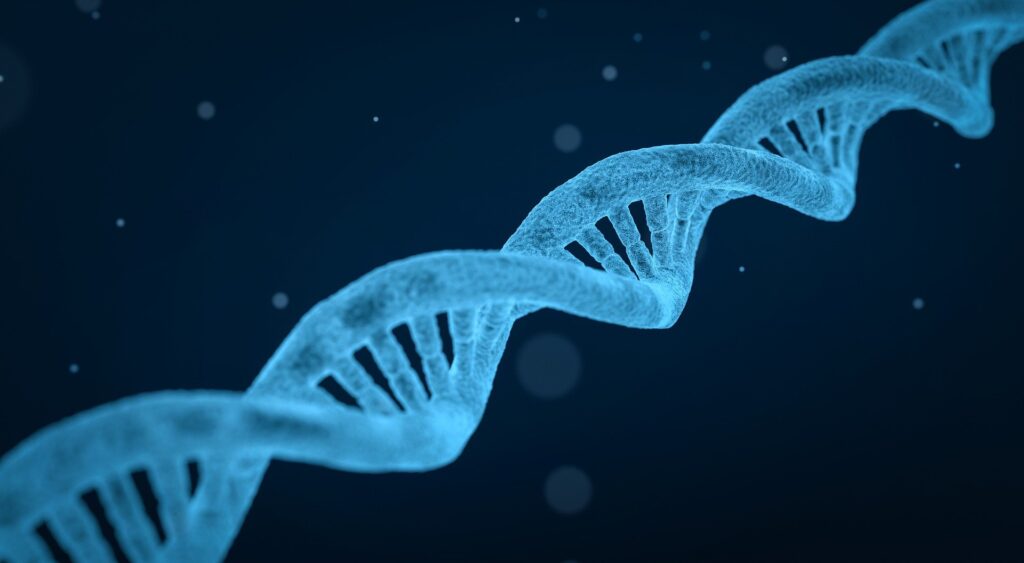
DNA profiling has revolutionised forensic science, but it was first used to solve a murder just 35 years ago. Today we’re digging into how scientists developed DNA profiling techniques and the first match that solved two murders.
DNA or Deoxyribonucleic acid was first discovered by Swiss Chemist Friedrich Miescher in 1869. Friedrich Miescher discovered what he called the nuclein inside the nucleus of a white blood cell, this would later become known as nucleic acid and eventually Deoxyribonucleic acid or DNA. Miescher’s plan was to isolate and study the protein components of white blood cells, but when he discovered the nuclein he discovered that they behaved unlike any of the other proteins in white blood cells. He discovered significant differences between nucleins and other proteins, the main one being that nucleins weren’t broken down and digested as other white blood cell proteins were.
Friedrich Miescher’s name fell into obscurity by the turn of the century but other chemists and biologists continued research into nucleins. In 1927 Russian biologist and geneticist Nikolai Koltsov proposed that inherited traits were transferred via a giant hereditary molecule that was made up of “two mirror strands that would replicate in a semi-conservative fashion using each strand as a template”.
In 1953 the double helix was discovered by James Watson and Francis Crick, building on the work done by researchers who had gone before them. But it would still be another 35 years before DNA would be used in forensic science.
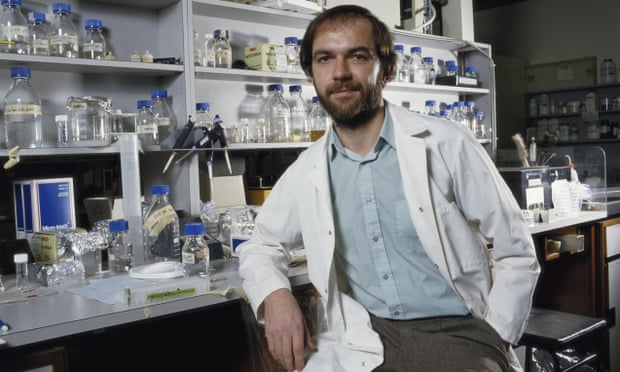
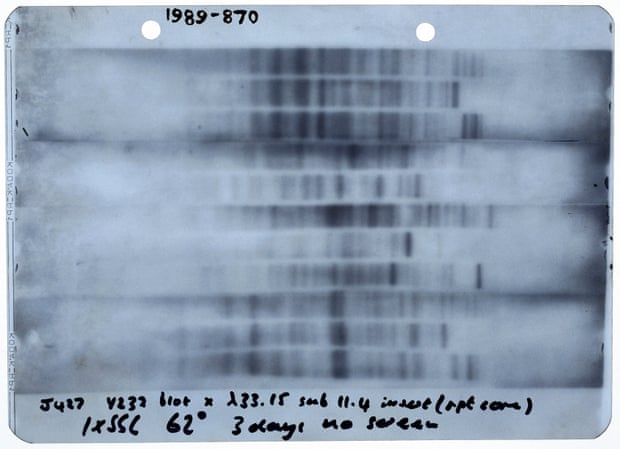
In 1984 British Geneticist and lecturer at the University of Leicester, Alec Jeffreys developed a method to profile DNA whilst studying x-ray images of a DNA experiment. This was first tested publicly in an immigration case the following year — Jeffreys developed profiles for a young British boy whose family was originally from Ghana, and profiles from the boy’s parents and compared them to prove that the boy was in fact their son.
In 1986, Alec Jeffreys’ DNA profiling technique was used for the first time in a criminal case that took place just five and a half miles from the university at which Alec Jeffreys developed the profiling technique.
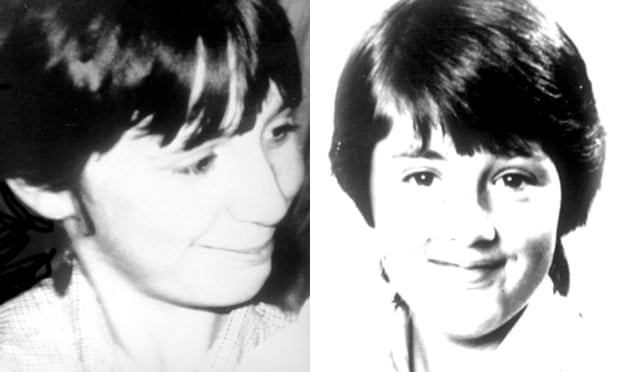
On July 31 1986 15 year old Dawn Ashworth from Enderby, a small town near Leicester in central England, had gone to a friend’s house, her parents expected her home by 9.30 that night, and when she failed to return home they reported her missing to the police. Two days later Dawn’s body was found in a wooded area called Ten Pound Lane.
The case was eerily similar to the unsolved case of Lynda Mann, a 15-year-old schoolgirl who had been assaulted and killed in the same savage and brutal manner in November 1983 in the village of Narborough, just a mile away from Enderby. Lynda had been babysitting and had taken a shortcut on her walk home, when she didn’t return home her parents and neighbours went out looking for her. The next morning she was found along a footpath called Black Pad by a local hospital worker.
Semen samples were recovered from Lynda’s body and forensic scientists were able to develop a blood type and enzyme profile from the sample, but DNA profiling was still a couple of years away.
The enzyme profile and blood sample matched 10% of the population of Britain, which did little to help the police find Lynda’s killer, and so, Lynda’s case went cold. Until 1986 when Dawn was murdered and the two cases were linked. Semen samples recovered from Dawn’s body and clothing matched the blood type and enzyme profile of Lynda’s killer and proved the two girls were killed by the same man.
A week after Dawn’s murder a local woman reported to police that she had seen a young man by the name of Richard Buckland in the area of Ten Pound Lane on the day Dawn disappeared.
Richard Buckland was 17 years old at the time of Dawn’s murder – so would have been 15 at the time of Lynda’s murder – and worked as a kitchen porter at the nearby psychiatric hospital. Richard had learning difficulties and was known in the local area for following girls or hiding and jumping out to scare women. So based on this, he was arrested and questioned, and after being questioned by police, alone, for 15 hours, Richard Buckland confessed to Dawn’s murder, but denied murdering Lynda.
Police claimed that in questioning Richard knew details which hadn’t been released to the public, the position of Dawn’s body and her clothes hadn’t been released to the public, but Richard knew, so this was good enough for them. But because he continued to deny involvement in Lynda’s murder, police decided they would use this new technology called DNA profiling that was discovered just six miles away at the University of Leicester. Blood samples were taken from Richard Buckland and Dr. Alec Jeffreys and his team at University of Leicester developed a DNA profile and used the semen samples to develop a DNA profile for the killer. But when the two were compared, they didn’t match.
Buckland was released and charges against him were dropped. Now that the police understood the power of DNA profiling, they decided to carry out a DNA dragnet. So in early 1987 they sent letters out to every male between the ages of 13 and 35 in the local area asking them to volunteer a blood sample. But after more than 5,500 blood samples were compared, there were no matches.
The case went cold until August 1987, when police caught a break. Ian Kelly was overheard in a pub telling his friends that he had impersonated his friend Colin Pitchfork to give a blood sample. After interviewing Kelly, Police found that he worked with Colin Pitchfork at a local bakery but lived outside of the dragnet area, so he hadn’t been called on to volunteer a sample. Colin Pitchfork told Ian that he had already given a sample impersonating a friend who was wanted by police, and so he couldn’t give another sample because they’d find out he’d impersonated his friend.
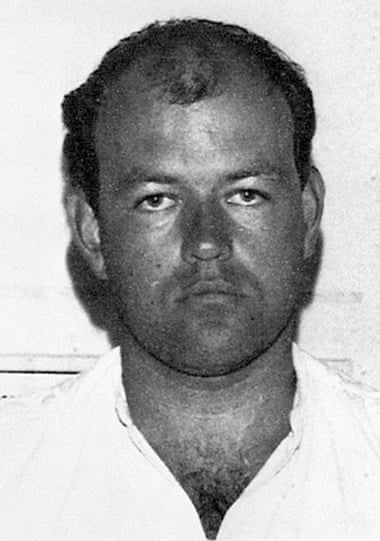
But, as it turned out, Pitchfork hadn’t been helping a friend out, he was just avoiding the police, because Pitchfork already had a history of indecent exposure, and he had been following the news very closely, and he understood how DNA profiling worked and how it would prove conclusively who the murderer was.
In September 1987 police arrested 27 year old Colin Pitchfork, he was a baker and was married with two children. During police questioning Pitchfork confessed to exposing himself to more than 1000 women and girls, beginning in his teens. He eventually confessed to two rapes, and the rapes and murders of Lynda and Dawn.
Blood samples were taken from Colin Pitchfork and his DNA profile matched that of Lynda and Dawn’s murderer.
The case went to trial and in 1988 Colin Pitchfork was found guilty of the rapes and murders of Lynda Mann and Dawn Ashworth, and sentenced to life in prison. The Lord Chief Justice of England and Wales at the time Lord Geoffrey Dawson Lane said “From the point of view of the safety of the public I doubt if he should ever be released.” A minimum term of 30 years was set, but in 2009 Pitchfork appealed it and it was reduced to 28 years.
In 2016 after serving 28 years in prison, Pitchfork was eligible for parole, and his advocates presented evidence of improved character, citing his education to degree level and claiming he had become expert at the transcription of printed music into braille, for the benefit of the blind. Needless to say Dawn and Lynda’s families opposed his release.
His application was rejected, but it was recommended that he be moved to open prison, and so in 2017 he was moved to an open prison, although the location was not disclosed.
His parole was reviewed two years later in 2018 – it is with all those who have parole rejected – and once again he was rejected. Pitchfork has changed his name to Colin Thorpe and will have his case reviewed once again this year, but we are yet to find out if his release has been approved.
FURTHER READING:
The Murders Of Dawn Ashworth & Lynda Mann Are Revisited In The BBC’s Latest True Crime Series
RELATED EPISODES:
07: Scotland’s Secret Serial Killer