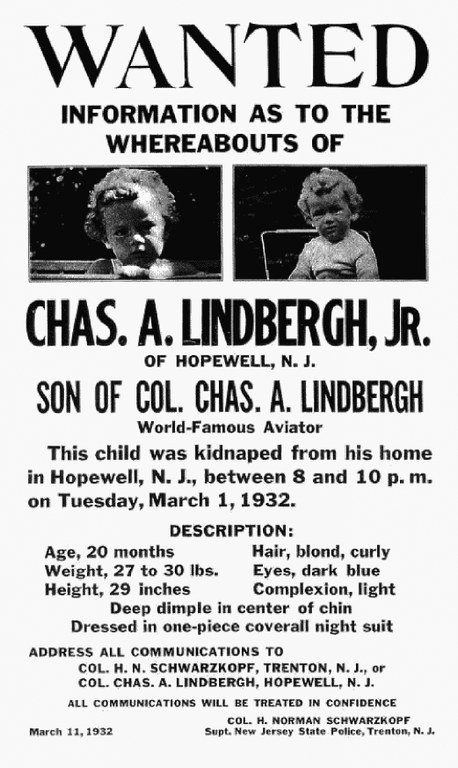
This week we’re covering the kidnapping and murder of baby Charles Lindbergh Jr. The Lindbergh baby kidnapping shocked the world and has been the subject of conspiracy theories for decades.
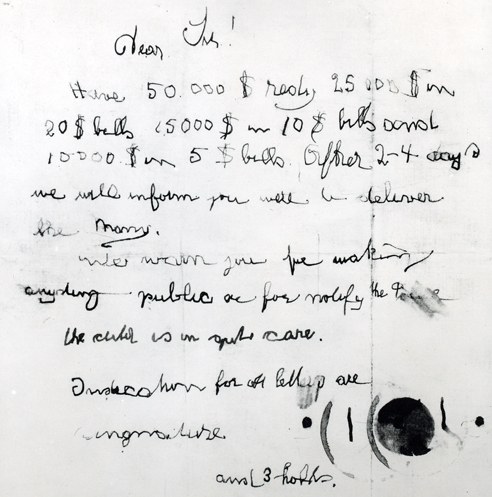
On the evening of March 1, 1932, domestic nurse Betty Gow discovered that 20-month-old Charles Augustus Lindbergh Jr was not with his mother as she had believed him to be, and when she alerted the child’s father the three rushed to the nursery on the second story of the house and discovered that Baby Charles was not in his crib. On the window ledge was an envelope containing a ransom note full of spelling and grammatical mistakes.
The note read:
Dear Sir! Have 50.000$ redy 25 000$ in 20$ bills 15000$ in 10$ bills and 10000$ in 5$ bills After 2–4 days we will inform you were to deliver the mony. We warn you for making anyding public or for notify the Police the child is in gut care. Indication for all letters are Singnature and 3 hohls
In the bottom right-hand corner of the page were two interconnecting circles, in the middle was a red circle with a hole in the centre, and a second and third hole punched either side of the blue circles.
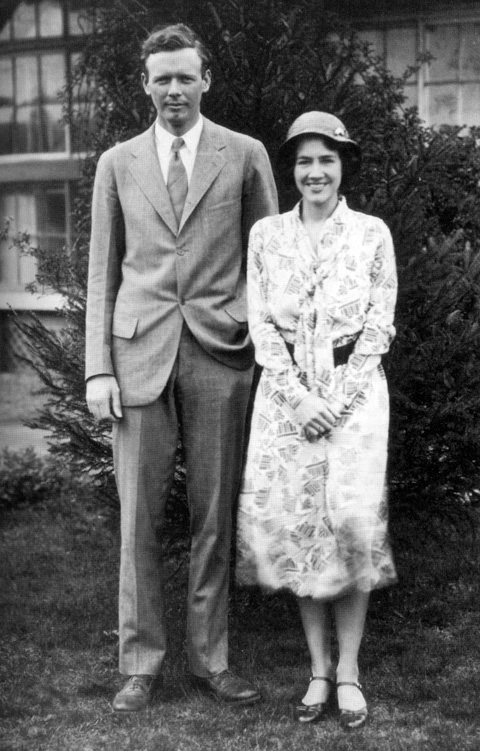
To understand why Baby Charles was kidnapped, we need to know a little bit about his family and why he was such a valuable target for kidnappers.
Baby Charles was the eldest child of Charles and Anne Lindbergh. Charles Augustus Lindbergh Snr was born in February 1902 and in the 1927 he shot to fame when he went from a fairly unknown, anonymous air mail pilot to being one of the most famous men in the USA after he made the first nonstop solo flight across the Atlantic, flying from New York to Paris in his purpose-built plane the Spirit of St. Louis, in 33 and a half hours.
The first nonstop flight between Europe and North America had taken place eight years earlier between Canada and Ireland. Lindbergh’s flight was the first solo transatlantic flight, and the first between two large metropolitan cities. It was considered a turning point in aviation and “Lucky Lindy” instantly became an American hero.
Charles Lindbergh’s father, also called Charles Lindbergh, was a Republican congressman, originally from Sweden. His parents emigrated to the US when he was just a baby following an embezzlement scandal. He was elected to the house of representatives from 1906-1917 and in 1916 he unsuccessfully campaigned for a seat in the US Senate, and in 1918 made a bid for governor, which was also unsuccessful. He strongly opposed America’s involvement in the First World War and advocated an America First approach.
Baby Charles’ mother, Anne Morrow was an aviator like her husband. The couple met in Mexico in 1927 when her father, Dwight Morrow, the Lindbergh’s financial advisor and bigwig at JP Morgan, invited Charles to accompany them on the trip. The couple married two years later. All of this is to say that the grandson of a massive banking executive and Republican congressman, and son of a national hero, Baby Charles was born into an incredibly rich family who weren’t going to starve as the Great Depression began, and this is what likely made him a target for kidnappers.
Once he was discovered to be missing the family contacted the local police department who immediately turned the case over to the New Jersey State Police who took control of the investigation.

Due to the high profile, celebrity status of the Lindbergh family, word of the kidnapping of Baby Charles spread quickly. The Lindberghs had bought the remote estate in New Jersey to escape from the media circus that surrounded them, but within hours hundreds had descended upon the property, destroying any evidence that might have been there.
Under the bedroom window there was a wooden ladder which had been used to gain access to the house and a baby blanket on the ground next to it. The ladder was homemade and constructed of three nesting sections that, when collapsed would easily fit into a car. One of the sections had broken at some point, likely during the descent with the baby. Mud was found on the carpets, but there were no traces of blood. A number of the baby’s fingerprints were found but no other prints were recovered, even from surfaces that witnesses such as the household staff, admit to touching.
Investigators quickly concluded that the kidnapper, or kidnappers, had worn gloves or some sort of cloth to cover their hands, and that based on the spelling in the note it was written by a native German speaker.
Appeals were made for the kidnappers to begin negotiations, and for investigators to tap into their networks of criminal informants, as well as “underworld figures”. Basically: ask various mobsters for help. A number of leads were followed that ultimately went nowhere. But one of the most well-known of these mafia connections was none other than Scarface himself, Al Capone.
When Baby Charles was kidnapped, Al Capone was waiting to be shipped off to prison for tax evasion following his trial the previous year. He offered a $10,000 ($190,064.23 or £142,400.87 today) reward for information leading to the arrest of the kidnappers, and even offered to use his vast network of criminal contacts to find information, at a price.
He proposed that if he was immediately released, he would help find the baby and then return to prison once Baby Charles had been found. He even offered his brother as collateral, by which we mean he offered authorities his brother as a prisoner until he returned once Baby Lindbergh had been found. Needless to say authorities quickly denied Capone’s offer, and he was transferred to a prison in Atlanta a couple of months later.
Six days after Baby Charles was abducted, a second ransom note was received. It had been postmarked in Brooklyn two days earlier on March 4. This second note increased the ransom amount from $50,000 to $70,000. Today that would be worth $1,330,449.64 or £996,486.82.
The note also included the same signatory mark that was on the first note – the circles and punched holes – which had not been revealed to the public.
In 1932 kidnapping was considered a state crime rather than a federal crime, which meant that it was up to each individual state to investigate, which as can imagine would cause problems across state lines. But in the days following Baby Charles’ abduction the FBI were called in to assist New Jersey State Police with the investigation, whilst other federal departments including the US Immigration Service, US Customs Service and the United States Coast Guard were all told to be on standby as they may be needed.
A third ransom note was sent to Wall Street lawyer Henry Skillman Breckinridge, he was one of a number of military colonels who had offered their support and assistance in the search for Baby Charles. He was also Charles Lindbergh’s personal attorney. This third note said that a proposed intermediary acting as a go between for the kidnappers and the family would not be acceptable to the kidnappers. The note asked that the family use a newspaper to notify the kidnappers that the note had been received and told them not to contact the police.
The same day John Condon, a retired school principal who was well known in the Bronx, had placed an offer in the Bronx Home News in which he offered the kidnappers $1000 extra (of his own money, not Lindbergh’s) if they allowed him to be the intermediary and if they turned Baby Charles over to a Catholic priest.
A fourth ransom was sent directly to John Condon saying that he would be an acceptable intermediary. On March 10 John Condon received $70,000 for the ransom and arrangements were then made, with communications being carried via newspaper columns, for John Condon to meet with a representative of the kidnappers.
Two days later a fifth note was hand delivered to Condon by a taxi driver who had received it from an unidentified stranger. This note told Condon that a sixth note would be found under a stone 100 feet from “an outlying subway station”. The sixth note directed Condon to Woodlawn Cemetery, near 233rd Street and Jerome Avenue in the Bronx. There he met a representative known only as John. The two men discussed arrangements for the ransom to be paid, and Kidnapper John agreed to provide proof that Baby Charles was still alive; he would send the baby’s sleep suit. Condon described the man as being foreign but as he stayed in the shadows, he was unable to get a good look at his face or clothing.
On March 16, a seventh note was received by Condon along with a baby’s sleep suit which was taken to be proof that the kidnappers still had Baby Charles and that he was alive.
Negotiations continued to go back and forth. Condon received the eleventh note on April 2, 1932, from an unidentified taxi driver who said he had been given it by an unknown man. Condon followed the instructions and found the twelfth ransom note under a stone in front of a greenhouse at 3225 East Tremont Avenue, Bronx, New York, as instructed in the eleventh note.
Condon followed the instructions in the twelfth note and that evening he met the representative John again. John had agreed to reduce the ransom back down to the original $50,000 (although some sources say that Condon told John that they had only been able to raise $50,000 and he accepted that.) Condon handed over the money in a distinct, handmade wooden box. The box had been chosen in the hopes that it would be identifiable later on.
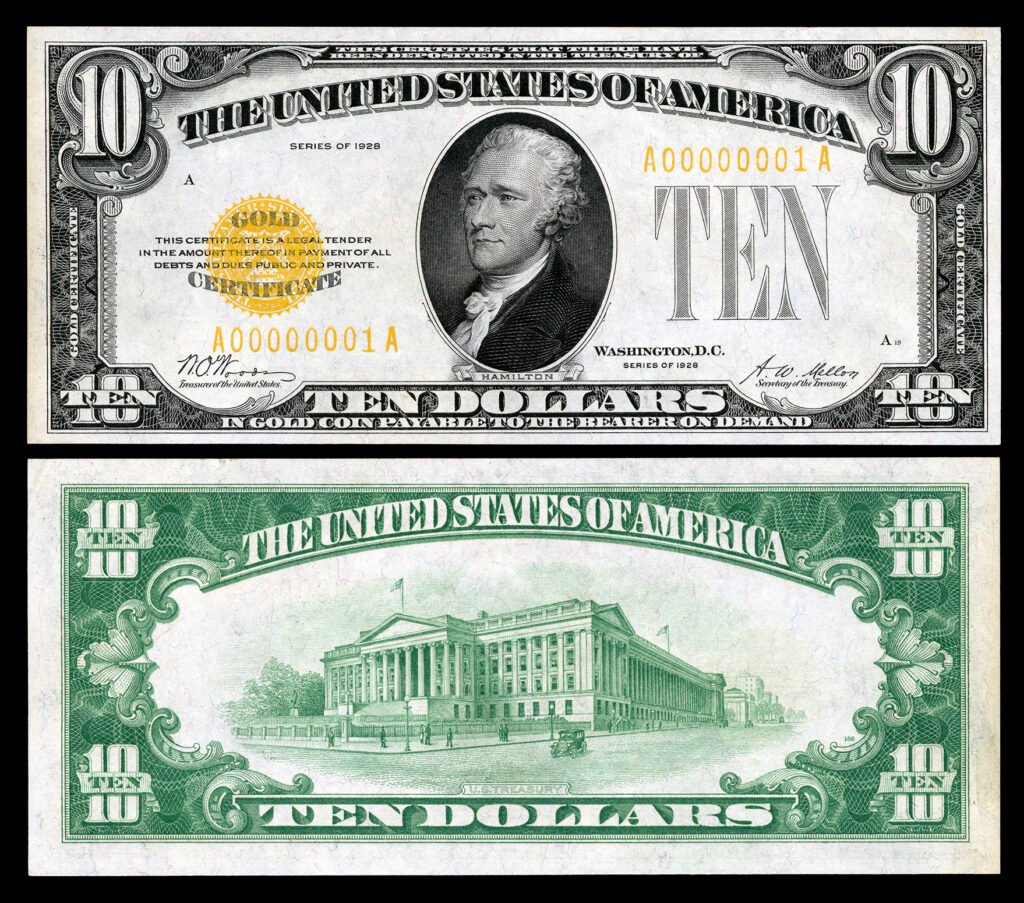
The bills weren’t marked, but their serial numbers were recorded. The ransom included a number of gold certificates which were about to be withdrawn from circulation in the hopes that cashiers and bank tellers would find this unusual if someone tried to spend or deposit them and contact the police. Gold certificates were pretty similar to a standard bank note, but they stated that the holder owned X-amount of gold rather than them having to store the gold themselves. They were withdrawn from circulation in 1933.
Kidnapper John told Condon that the baby was in the care of two women and handed him a thirteenth note which contained instructions to find Baby Charles. Then John just walked off into the darkness with $50,000.
The note said that the baby was on a boat near Martha’s Vineyard called “Nellie”. By this point it had been 32 days since he had been abducted.
A search was immediately launched to find this boat called Nellie somewhere in the vicinity of Martha’s Vineyard.
No boat called Nellie was found on or near the island. Charles Lindbergh himself even made a number of flights over the area to try and find the boat. There were no more communications from the kidnappers – which is not surprising considering they now had their money.
It would be another 40 days before, on May 12, 1932, the body of Baby Charles was found on the side of a road less than five miles from the Lindbergh Family’s New Jersey estate.
He was found by a trucker who had pulled over and walked a short distance from the road to pee.
The body was identified as Baby Charles by his nurse, Betty Gow, by the distinct overlapping of his toes on his right foot. He was also wearing a shirt she had made for him.
The body was badly decomposed, but Baby Charles had suffered massive blunt force trauma to the head, and medical examiners concluded that he had been killed around the same time that he was kidnapped. There had been an attempt at a burial, but the body had been scavenged by wildlife. His body was then cremated on May 13, 1932, just one day after it was discovered.
Investigators began to theorise that the kidnappers and murderers were people who were known and likely quite close to the family. They were particularly interested in a British servant called Violet Sharp who worked for the Morrow Family at the home of Anne Lindbergh’s parents. Violet had reportedly given conflicting information about her whereabouts on the night Baby Charles was abducted.
Violet was interrogated multiple times and police thought they were closing in on their suspect, but then on June 10, 1932 she took her own life by drinking a bottle of silver polish which contained arsenic.
The police were criticised for their heavy handedness, and it was only after her death that Violet’s whereabouts were investigated and confirmed.
At this point it’s worth noting that many sources mention that Charles Lindbergh Snr, Baby Charles’ father, was very, very involved in the direction the investigation took from the beginning. He was insistent that the infant’s body be cremated as soon as humanly possible following the discovery of the body. So, it could have been possible that he was directing the investigation towards Violet and it was only after her death that investigators began looking at other possibilities.
John Condon was also investigated by authorities, and he was publicly vilified for his actions in trying to help the Lindberghs, but there was never anything to link him to the crime in any way. He also carried out his own investigation into the kidnapping, claiming that he would recognise “John” if he ever saw or heard him again, but this also led nowhere.
With no suspects the investigation ground to a halt. All that investigators could do was try to track the money used in the ransom.
They distributed 250,000 copies of a pamphlet which listed the serial numbers of the bills used in the ransom, to businesses and banks throughout the North Eastern USA, with the majority being given to businesses in New York City. A handful of the ransom bills were discovered around the North East and Midwestern States in cities such as Minneapolis and Chicago, but they were just that, a few bills spent here and there. Investigators were never able to track down who had spent them, and of course it is possible that they had re-entered circulation without being detected and then given out as change, so whoever had received them as change and then spent them could have had nothing at all to do with the kidnap and murder of Baby Charles.
A presidential order declared that all gold certificates had to be exchanged at a bank for regular bills by May 1, 1933. Just days before the deadline a man going by the name of JJ Faulkner went into a Manhattan bank with $2,980 worth of gold certificates to exchange for regular bills. These gold certificates were later matched to those used in the ransom payment. JJ Faulkner had given his address as 537 West 149th Street which is in Harlem/Sugar Hill in upper Manhattan. But there was no record of a JJ Faulkner ever living at that address, although a Jane Faulkner had lived there 20 years earlier. Jane Faulkner was questioned. She denied any involvement and there was nothing to indicate she had anything to do with the crime.
More and more of the ransom bills were entering circulation in New York, but they weren’t being picked up by cashiers, it was only when they got to the banks that it was realised that they were from the ransom payment. Detectives realised that most of them were being spent along the Lexington Avenue subway route, along which was an east Manhattan neighbourhood called Yorkville.
This neighbourhood had a large German and Austrian community. Which fit with the investigators’ theory that the mistakes and strange word choices in the first ransom note could be explained if the writer was a native German speaker.
In September 1934, two and a half years since the kidnapping and murder of Baby Charles, a bank teller found a gold certificate which was traced back to a local petrol station. In the certificate’s margin the store manager had scribbled down the licence plate number of the customer who had paid with the certificate bill, because he thought he was acting suspiciously and might have been a counterfeiter. The licence plate was traced to a man named Richard Hauptmann, a German man living in The Bronx who had a criminal record back home.
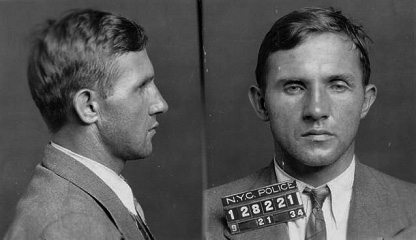
When he was arrested, he had a single $20 gold certificate on his person, and in a search of his property law enforcement found $14,000 in cash.
Hauptmann was taken into custody where he was beaten up by investigators “at least once” during his interrogation. He maintained his innocence and said that he had found the money in amongst the possessions of a friend of his who had died earlier that year after returning to Germany. The friend was Isidor Fisch, and he did indeed die in May 1934 not long after he returned to Germany from New York, but that is where the truth runs out.
A search of Hauptmann’s home revealed a number of things which linked him to the crime including: a notebook that contained a diagram of a ladder similar to the one used in the kidnapping; John Condon’s telephone number and address; a sawed-off floorboard was also discovered in the attic of his home. This section of wood was determined by an expert to be an exact match to one of the pieces of wood used to create the ladder.
On September 24, 1934 Richard Hauptmann was indicted in New York for extorting a ransom from Charles Lindbergh and on October 8 he was indicted for the murder of Baby Charles, he was then surrendered to New Jersey authorities and transferred to the Hunterdon County Jail in Flemington, New Jersey, to await his trial.
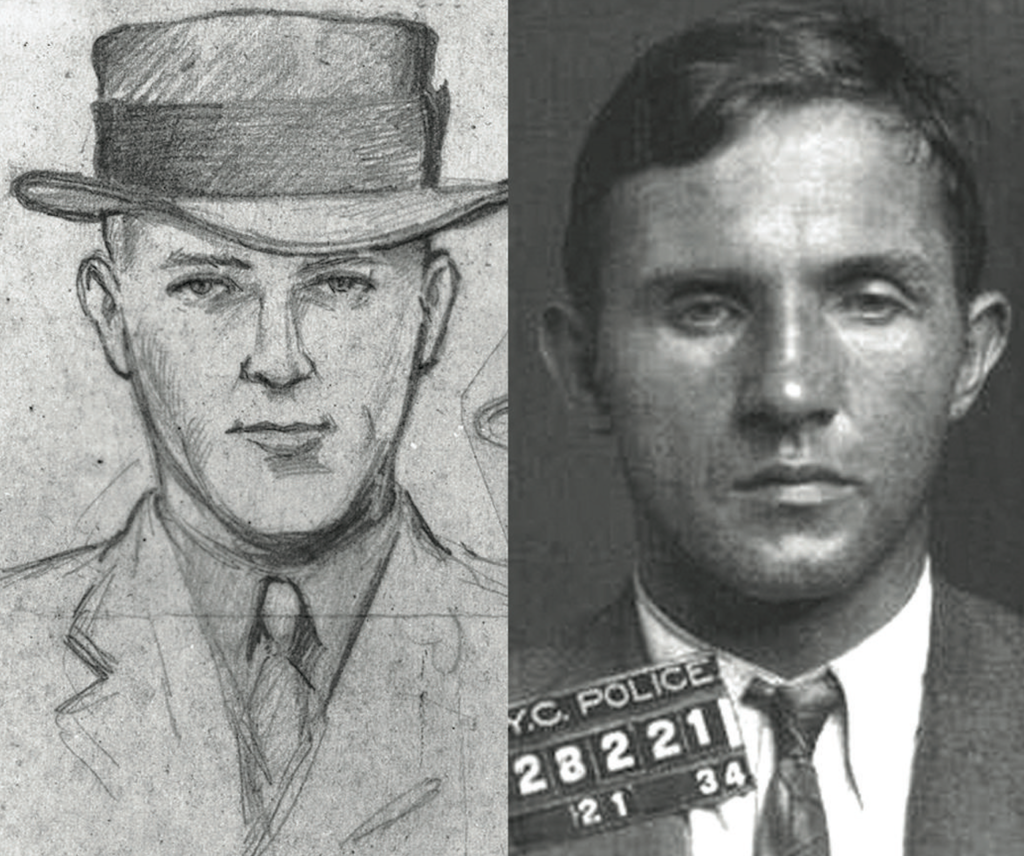
We don’t tend to put much faith in composite sketches, but this is one of the few where the perpetrator is quite similar to the drawing developed from John Condon’s description.
A quick bit of background on Hauptmann. He was born Bruno Richard Hauptmann in the town of Kamenz near Dresden in Saxony, Germany, on November 26, 1899. He was the youngest of five with three elder brothers and an elder sister. In his teens he attended trade school at night, first training to become a carpenter before changing to machine building. In 1917, his father died. Then his brother Herman was killed in France, fighting in World War One. Shortly after that, his brother Max was killed in action in Russia. He was conscripted to the German army in 1917, serving in an artillery division for the final year of the war.
After the war Hauptmann and a friend robbed two women pushing prams, he broke into and burglarised a local mayor’s house, and he was suspected of a number of other burglaries. He served three years in prison.
In November 1924, after his release from prison, Hauptmann stowed himself away on an ocean liner bound for New York and after lying to immigration about his life in Germany, Hauptmann settled in the already established German community in New York City. In 1925 he met Anna Schoeffler, a waitress who had also immigrated from Germany, and the couple married later that year, and started a family eight years later.
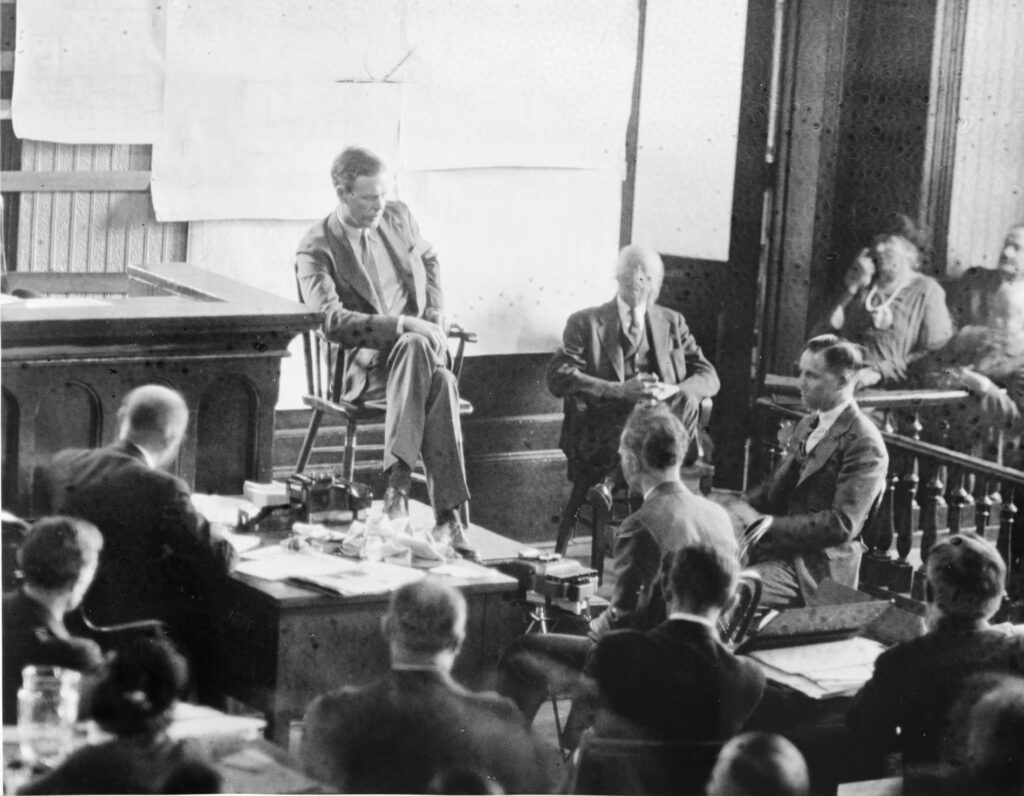
Hauptmann’s trial began in Flemington in February 1935 and was dubbed the “trial of the century.” Every hotel was fully booked as reporters along with curious members of the public flocked to the courthouse. The New York Mirror bought the rights to Hauptmann’s story in exchange for hiring an attorney for him.
The trial lasted into September and evidence against him included: $20,000 found including the $14,000 which was found in his garage, handwriting samples which were matched to the ransom notes and expert testimony that the floorboard found in his house matched the ladder used in the kidnap. He was identified as the man who received the ransom money, the man who spent the gold certificates, and a witness claimed to see him in the area near the Lindbergh homes on the day of the kidnapping. But the defence argued that it was all circumstantial evidence and there were no fingerprints at the scene, on the ladder or the ransom notes, or any other proof that he was ever at the Lindbergh home.
Hauptmann had had no source of income in the past few years, yet he had been able to afford extravagant purchases and send his wife on trips home to Germany. He claimed that his friend Isidor Fisch, who had died after returning to Germany, owed him thousands of dollars and so when he found the box filled with money and gold certificates, he just kept them.
But the jury didn’t believe Hauptmann’s proclamations of innocence, and he was found guilty of First-Degree Murder on February 13, 1935, he was sentenced to death.
His legal team appealed the sentence, and his execution was stayed twice, but on April 3, 1936 he was taken to New Jersey’s electric chair. He maintained his innocence right up until the end proclaiming, “Ich bin absolut unschuldig an den Verbrechen, die man mir zur Last legt” (“I am absolutely innocent of the crimes with which I am charged”) before he was led from his cell to the chair.
His widow Anna also proclaimed his innocence right up until she died in 1994. She had him cremated and two Lutheran pastors conducted a private memorial service, but outside the church 2,000 people had gathered. We can’t know for sure but it’s likely that most of them would have been members of the press and the general public rather than 2000 mourners.
But that’s not the end of the story.
The case has come under a great deal of scrutiny ever since Hauptmann’s conviction and execution, and there are many alternative theories which posit that Hauptmann was innocent all along, and that the killer was a lot closer to home.
We don’t have time to go into all of them, so we’ll just cover some of the more popular ones.
According to one fingerprint expert fingerprints were found on the ladder, but none of them matched Hauptmann, and so the investigators washed the ladder to remove all of the fingerprints and claimed that no prints were found.
Most of the theories focus on the idea that Charles Lindbergh was responsible for his son’s death and manufactured the kidnap story as a cover up. One theory posits that Charles Lindbergh had climbed up the ladder and brought his son out the window and down the ladder, but he had dropped his son on the descent, accidentally killing him. Remember that in 1932 Charles Lindbergh was still an American hero, making big changes in aviation, writing books and touring the country. So, it does make sense that he would fear the backlash if the public heard that he was responsible for his son’s death, even if it was an accident, and rich people have resources beyond most of us to make their problems disappear.
Another theory posits that Baby Charles didn’t actually die.
Charles Lindbergh may have been an American hero, but he was also a huge racist. Lindbergh was a huge advocate of eugenics and he was known to be anti-Semitic and supported their attempts to deal with what he described in many speeches and articles as “The Jewish Problem”.
There were murmurings amongst the upper classes that Baby Charles had been born with some kind of physical disability. Now for a card-carrying eugenics supporter, this is a punishment worse than death. Not only was Charles Lindbergh seen as an American hero, he was also seen as kind of a perfect example of American manhood. He was fit and healthy, he had served in the military, he had the perfect American dream kind of life, a beautiful wife, shit tonnes of money, the kids were popping out. So how could it be that such a fine specimen, the pinnacle of American manhood, had produced a defective child?
Well, obviously a man who advocated for disabled people to be sterilised and/or killed couldn’t have the public knowing he had a son with physical disabilities. So, the theory goes that he orchestrated the whole thing, he smuggled his son out of the country and then faked the kidnapping, acquired a dead child from somewhere to use as a decoy. The family nursemaid identified the boy, and the body was quickly cremated the day after being found to ensure that nobody would ever know.
Now, this theory came about with the benefit of hindsight based on Charles Lindbergh’s increasing advocacy of eugenics and support of Hitler in the late 1930s and has been dismissed by many in law enforcement as pure fantasy.
Although in amongst his racist repertoire, Charles Lindbergh also lectured his public on the importance of the traditional family and remaining faithful to one spouse your whole life. But it turns out that was “do as I say not as I do”. Because between 1958 and 1967 he fathered seven children with three mistresses whilst he was stationed in Germany. Just days before his death in 1974 he wrote to all three of his mistresses imploring them to keep the affairs, and resultant children, a secret. He visited each of his German children once a year, but they were never told his real name, it was only after one of them, Astrid, read an article about him in the 1980s and saw the attached photos that she did some more digging finding photos and letters in her mother’s possessions and discovered her father’s true identity.
In 2003 DNA tests proved that Lindbergh had fathered Astrid and her two siblings.
Reeve Lindbergh who was the youngest of Charles and Anne Lindbergh’s six children, noted in her journal following the DNA testing that “This story reflects absolutely Byzantine layers of deception on the part of our shared father. These children did not even know who he was! He used a pseudonym with them (To protect them, perhaps? To protect himself, absolutely!)”
So, it is not beyond the realms of possibility that Charles (and Anne) could have disappeared a child who they thought could have been an embarrassment or a hindrance to their lives.
The final theory is that Hauptmann was guilty, but he did not act alone.
Some believe that there were at least two other men who acted alongside Hauptmann, both either German or native German speakers. This comes from an author named Robert Zorn whose father believes that he heard a conspiracy being discussed to kidnap and hold a rich family’s child ransom for cash.
This could also make sense, it is a lot of work for one man to orchestrate the whole thing, and there is the matter of the money. Yes, Hauptmann had been making extravagant purchases before he was arrested but figures range from $14000-$20000 being found in his house and garage after his arrest. Could he really have spent $30-$36000 in two and a half years, and if so, what had he spent it on? It would make sense that he was working with accomplices who he then split the $50000 ransom with.
This theory is disputed though because Hauptmann had many, many, many chances to give up his accomplices and confess to his own role in the kidnap and murder of Baby Charles for a lesser sentence or to avoid the death penalty, but he never did. Some claim that this helps to prove he was innocent. If he could have done anything to avoid the death penalty he would have and so by keeping quiet that is supposedly proof that he knew nothing.
The legacy for lack of a better word that this case has though is that in the summer of 1932 just three months after Baby Charles disappeared, kidnapping was made a federal and capital crime which means it is now within the FBI’s remit.
And that is the story of the Kidnapping and murder of Baby Charles Lindbergh.
FURTHER READING:
Who Killed Lindbergh’s Baby – PBS Nova
FBI archives – artist sketch vs Richard Hauptmann
FBI Famous Cases – Lindbergh Kidnapping
RELATED EPISODES:
16 & 18: Moira Anderson & Sandra Brown Part 1 & Part 2
06: The Disappearance of the Sodder Children
Listen below or wherever you listen.